
“Hero” usually refers to a person who possesses extraordinary skill and courage, while at the same time leading a group of followers. The hero is a prominent theme in ancient literary works, whereas in modern literary and artistic works, the theme of the hero is no longer so important, accompanied at the same time by the rise of the “anti-hero” theme. However, I find that I still do not quite like anti-heroes like Walter White (Breaking Bad), and still prefer traditional heroes—and specifically a particular type of hero crafted by Hollywood.
For such a type of hero, the examples that come to my mind include Cobb (Inception), Miller (Saving Private Ryan), Mitchell (Top Gun: Maverick), Sonny (F1), and Aragorn (The Lord of the Rings series). Although I wanted to give a name to such a type of hero by summarizing their commonalities, I found it difficult for me to do so. Since naming often requires selecting one main characteristic point, choosing one main characteristic among several characteristic points is overly arbitrary. Moreover, I found that this type of hero is very likely the archetype of the modern hero. Therefore, we might as well just call these people “modern heroes”!
First, let us look at what characteristics ancient heroes in ancient Greek mythology possess. They lived openly for glory. The reason Achilles chose a short life in pursuit of glory was precisely to obtain publicly recognized fame after death. Their expression of emotion was direct and exaggerated. Achilles’ grief over Patroclus was earth-shattering and operatically grand. They had no inner life, because their inner life was completely unified with their public role, with no clear boundary between the two. Achilles’ inner world was crystal clear; whatever he felt, he expressed. They fought primarily for themselves. Achilles fought for his own glory and his rage over Patroclus; as for the well-being of the Greeks, it was to a large extent merely an incidental factor in his motivation.
Modern heroes are completely opposite to ancient heroes on these characteristic points. Modern heroes do not seek glory, much less fulfill their own desires, but are guided by duty or responsibility, which usually also leads to situations of reluctance. They usually do not express their emotions directly, and choose suppression instead. They have an inner life, and this hidden inner life is split from their public role. They fight primarily for others or for something higher, rather than fighting for themselves. I believe the best portrayals of this kind of modern hero come from Hollywood films.
Cobb planting an idea in young Fischer, Miller leading a small squad to find Ryan, Mitchell leading elite pilots in training and executing a bombing mission, Sonny participating in F1 races, Aragorn becoming the leader of the Fellowship of the Ring and the King of Gondor—they were all reluctant when accepting these missions and taking on leadership roles. This was not because they were selfish, but because their own personalities or past experiences made them unsuited to undertake this mission, although facts proved that if they had to do it, they would do an outstanding job. Mitchell privately said, with tears in his eyes, that he was not suited to be an instructor. And Aragorn simply went into self-exile and became a ranger. Sonny lived in an RV and washed his clothes in a public laundromat. Although they possessed extraordinary courage and skill, because they were unwilling to become leaders and accept the mission at the beginning, they were consequently unwilling to become heroes. And the reason they became heroes was that people, as well as they themselves, discovered that they happened to be the most suitable people to be in that position, and the reason that position existed was that there was a greater good to be realized, and this greater good was more important than their own personality inclinations. Thus, a noble duty or responsibility pushed them to become heroes. And except in Aragorn’s case—because a king cannot resign—the other four heroes stepped down (or died) immediately after the mission was completed; they neither clung to the power they had obtained nor intended to enjoy any fame or glory, but immediately retreated back into their private lives.
Modern heroes almost never express their emotions directly, at least not in front of the others whom they are leading. Miller, Sonny, and Aragorn almost always keep a serious face, although Miller’s fear is still revealed through his trembling hands. Mitchell maintains his signature smile because a military commander needs to use this kind of smile to give soldiers confidence, just as General Eisenhower always maintained his iconic smile when meeting his soldiers. Don’t they feel fear and anxiety? This is related to innate personality, and the neuroticism dimension in the Big Five personality traits provides a pointer for this. If a person’s level of neuroticism is relatively low, then this person is inherently less prone to feeling fear or anxiety.
However, this is also related to emotional management mechanisms. Military historian John Keegan proposed a concept called “the mask of command,” meaning that the position of a commander makes the person sitting in that position naturally refrain from letting their true feelings show directly in front of the soldiers. The mask is sometimes physical; for example, with Manstein sitting in his headquarters or Hitler sitting in the Wolf’s Lair, ordinary soldiers could hardly see them in the first place. But the mask is sometimes also an emotional management mechanism, or a persona in the Jungian sense. When Eisenhower went to visit the soldiers of the 101st Airborne Division on the eve of D-Day, he actually went with feelings of fear and anxiety—because his own orders were pushing them toward the dangerous front lines of death—yet he maintained his signature smile. Only after all the planes had taken off did his tears flow out.
Cobb’s situation makes us deeply aware of the role of the mask of command. After the operation fell into crisis right at the beginning, he temporarily lost his composure, roaring at and blaming Arthur, while Arthur instead persuaded him more calmly, and at the same time the rest of the team was planning to give up. People are not perfect, and occasionally the mask slips off. Yet Cobb also quickly regained his rationality, returned to his leadership role, and commanded very calmly: “Downwards is the only way forwards,” and revitalized the spirits of the others. In this way, he put the mask of command back on again. However, Cobb is indeed the least typical among the five modern heroes I mentioned.
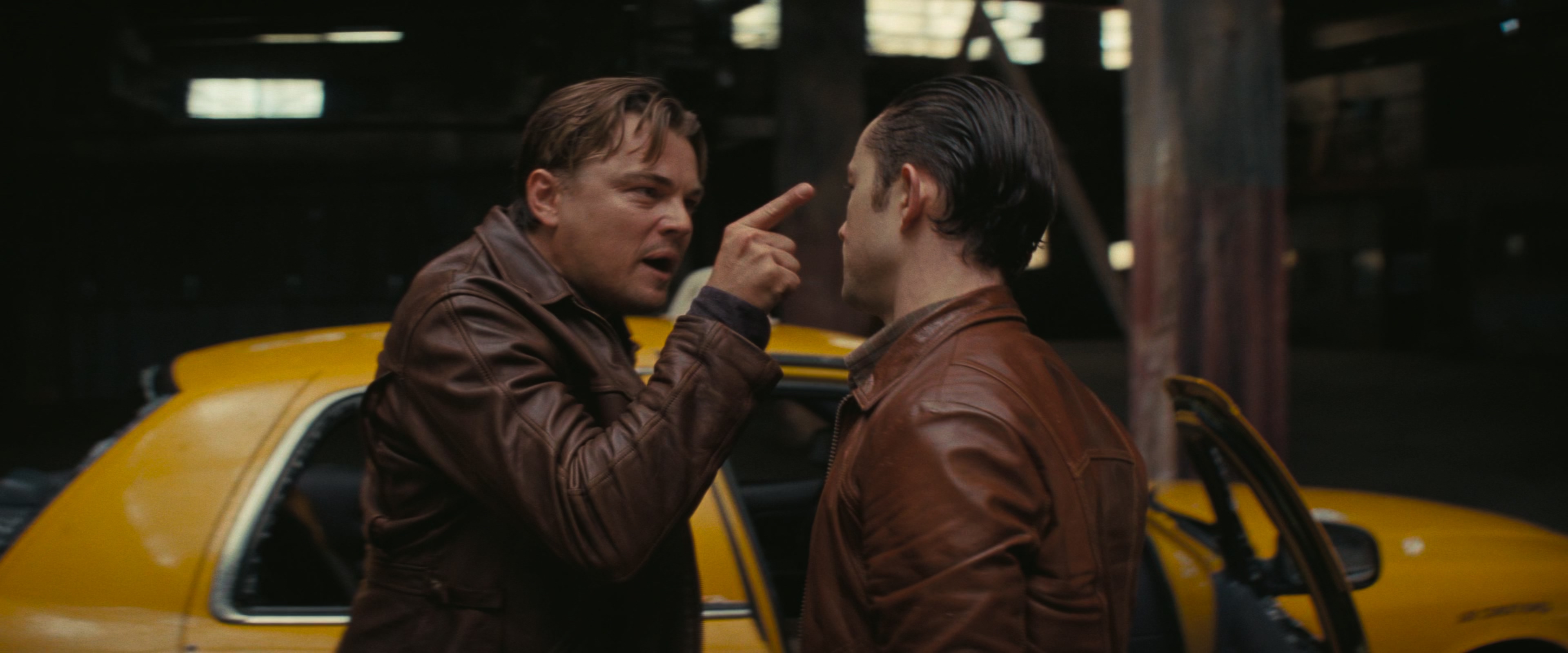
Modern heroes usually also have a hidden inner life—and it may be related to romantic love. Cobb mourns his late wife, and the shadow lingers without dispersing. Back in his hometown, Miller is an English teacher and a husband; moreover, deep down he is not without doubts about the mission to save Private Ryan, yet as captain, he had to suspend his questioning. Mitchell mourns his dead comrade Goose. Sonny has hidden physical trauma. Aragorn deeply loves Arwen. Their hidden lives are revealed in some way to the members of the team, which often fosters the members’ understanding of the hero, while also allowing the troubled mission to proceed more smoothly, and often serves as a key turning point driving the movie’s plot forward.
None of the modern heroes are chasing profit, fame, or personal gratification for themselves, but rather for others or a higher good. Cobb gave his entire share of the bounty to the chemist, while he himself only wanted to fulfill his duty as a father. Miller was going to rescue someone he had never met before. Mitchell was going to take the pilots in and bring them back safely. Sonny was going to save a racing team on the verge of bankruptcy, and after winning the championship, he was not even willing to attend the ceremony to enjoy the fame he had earned. Aragorn was out to save the world of Men.
Why am I so captivated by these modern heroes? This is not mere fondness, but a deeper, special kind of identification. I possess certain unique knowledge, attitudes, skills, and ideas, as well as combinations of them, which the vast majority of people around me cannot fully understand; what this causes is loneliness, and what this corresponds to is the inner world of modern heroes. I am introverted, and I am never ostentatious in daily life either—although writing is an exception. It is not to say that only introverts can become heroes, but rather that introverts, by nature, find it easier to understand a hidden inner world. I am also taking on certain duties, although these duties are far less dramatic or grand in significance than the duties borne by movie characters. Everyone admires power, skill, and courage, and perhaps many people still aspire to become heroes, yet not everyone appreciates loneliness, appreciates the split between inner life and public role, or truly understands modern heroes.
Leave a Reply